AI-Powered Data Intelligence
Turning alert noise into actionable AI insights security teams can trust and act on
Role
Product Designer
Team
Co-founders, Engineering
Tools
Claude Code
Timeline
3 Months
Role
Product Designer
Team
Co-founders, Engineering
Tools
Claude Code
Timeline
3 Months
Context
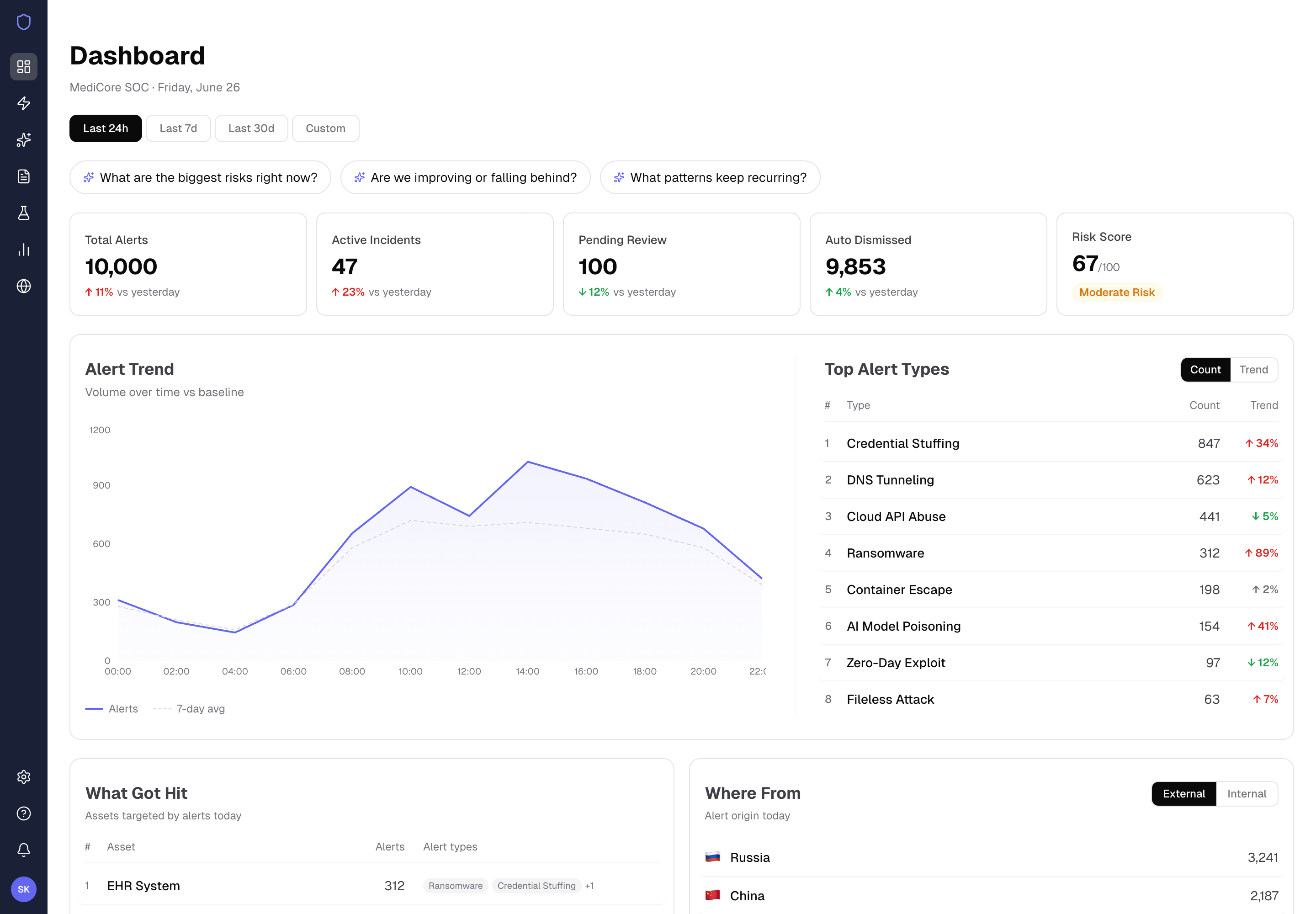
The customers' security teams were drowning in alert noise. 10,000 alerts a day, with 40 to 60 percent false positives and real attacks hidden in the pile. I designed an AI-native investigation flow where AI handles triage, allowing security analysts to focus on judgment and taking action.
Problem
Security analysts are shown AI analyzed alerts at every step. The challenge is designing an experience they can trust and act on.
As the sole designer, I owned the full product from information architecture and dashboard design to the incident investigation experience and AI reasoning presentation. The core challenge was how to help users trust AI generated analysis and act on it confidently.
To address this, I spoke to customers, PM, and engineering and identified 3 design principles to ensure the investigation experience is transparent and trustworthy.
Designing for trust
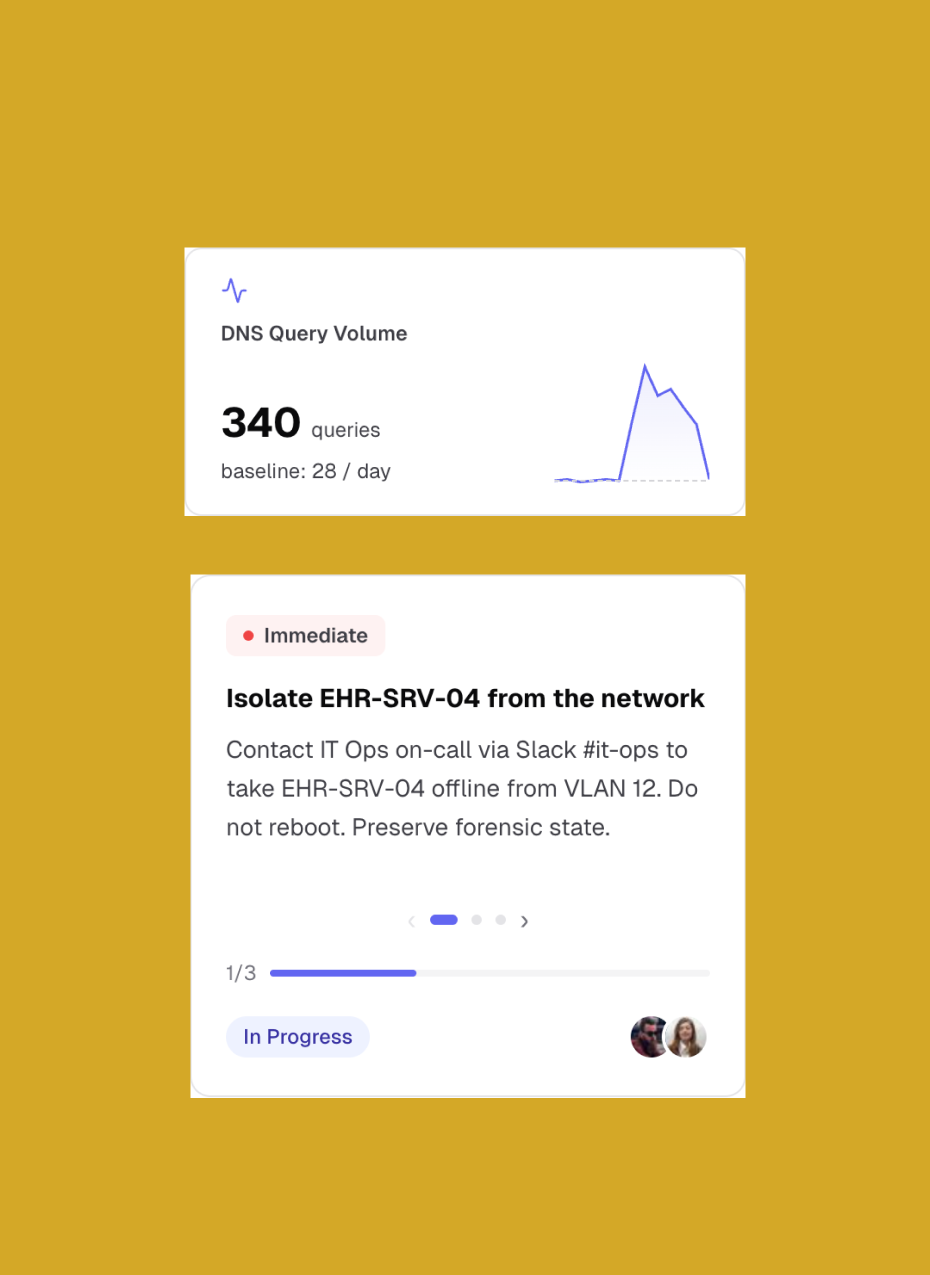
Presented AI reasoning in plain English so analysts could act without interpreting raw data.
Surfacing transparency
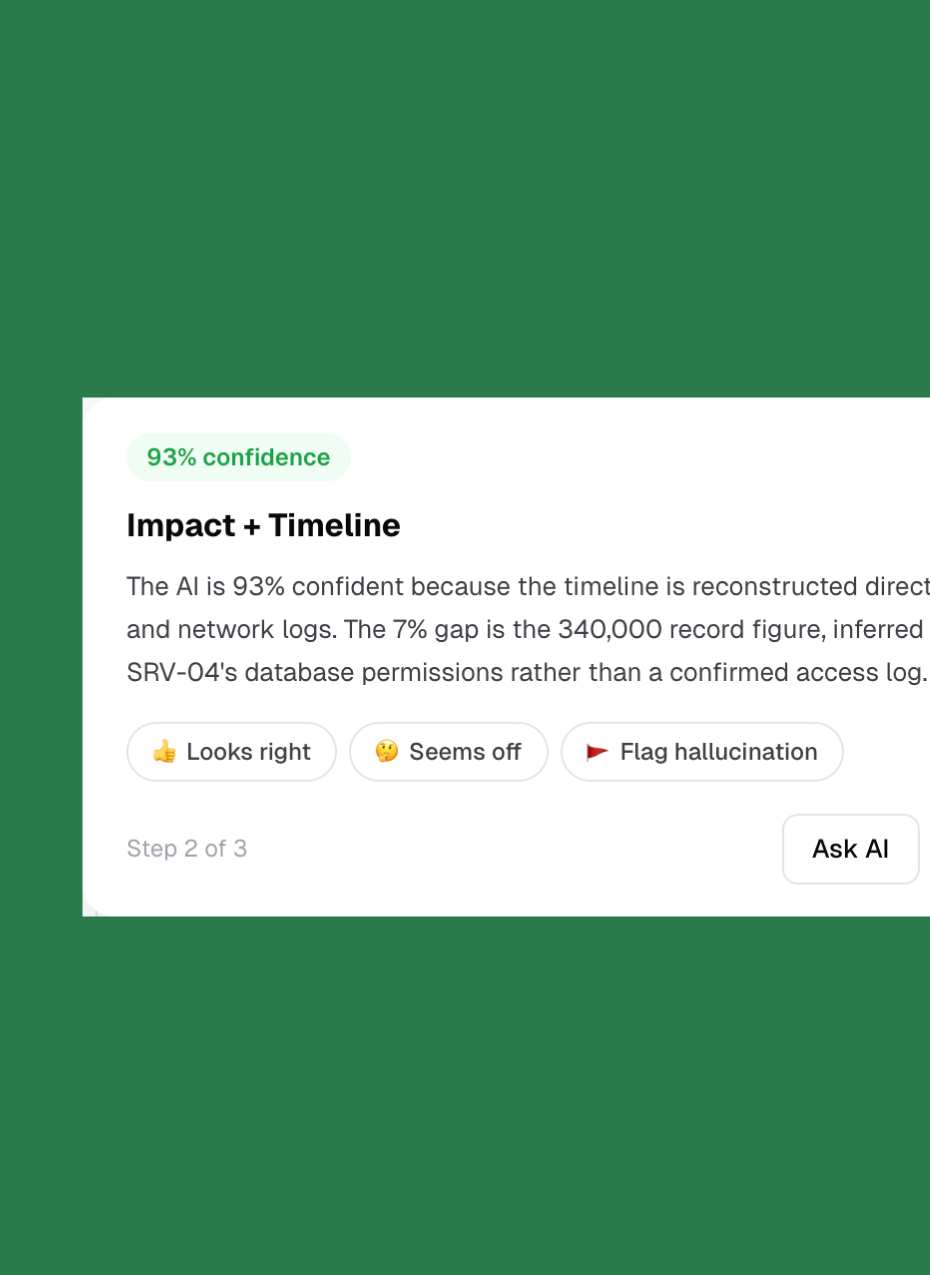
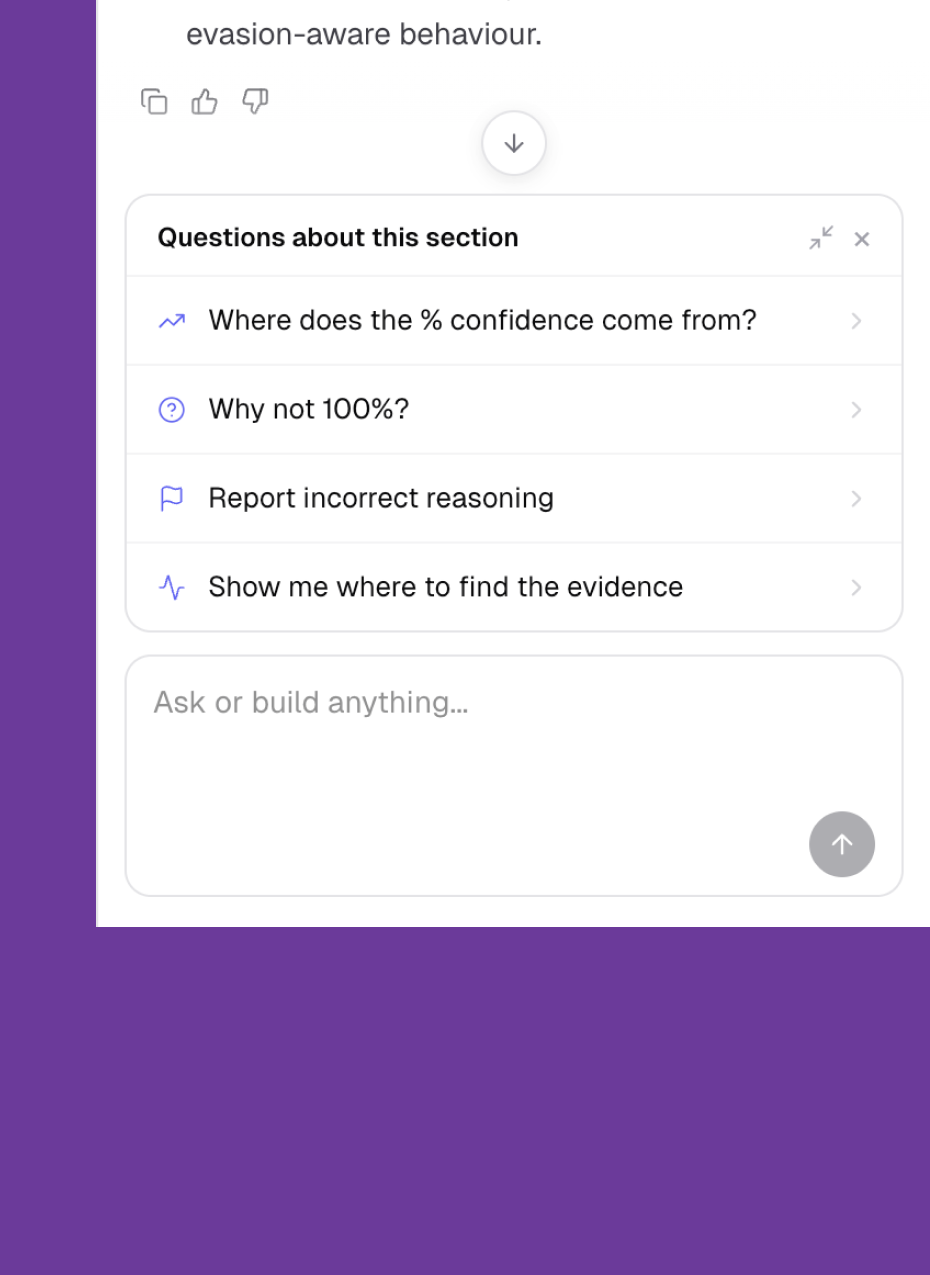
Showed what the AI was confident about and where the uncertainty came from.
Feedback on AI claims
Let analysts ask follow-up questions and flag hallucinations directly in the side panel.
7 in 10 analysts resolved incidents without cross-checking raw logs
🧩Where It Started
The AI flags thousands of alerts. The problem is no one knows how to act on them.
The whole thing started with one line from the CEO: 'Our AI generates a lot of alerts, but we don't know how to deal with it.' My job is to bring chaos into clarity.
💡My Approach
I started by understanding the product, users, and problems.
I started with a few questions: What are these alerts, how were they handled before AI, what changed when AI entered the workflow, and where does the user fit now?
🎯Research & Define
The problem is about trusting the insights that AI surfaced.
Users' workflow shifted from writing rules, reviewing, and investigating alerts to verifying the AI's verdict and acting on it.
🔄Design Iteration
I iterated until users trusted the AI's reasoning and acted on it.
Three rounds of iteration: from showing what AI detected, to explaining what it decided, to evidence users could question.
🧩Where It Started
The AI flags thousands of alerts. The problem is no one knows how to act on them.
The whole thing started with one line from the CEO: 'Our AI generates a lot of alerts, but we don't know how to deal with it.' My job is to bring chaos into clarity.
💡My Approach
I started by understanding the product, users, and problems.
I started with a few questions: What are these alerts, how were they handled before AI, what changed when AI entered the workflow, and where does the user fit now?
🎯Research & Define
The problem is about trusting the insights that AI surfaced.
Users' workflow shifted from writing rules, reviewing, and investigating alerts to verifying the AI's verdict and acting on it.
🔄Design Iteration
I iterated until users trusted the AI's reasoning and acted on it.
Three rounds of iteration: from showing what AI detected, to explaining what it decided, to evidence users could question.
🎯 Solution
An AI-native investigation flow where analysts move from alert triage to confident action
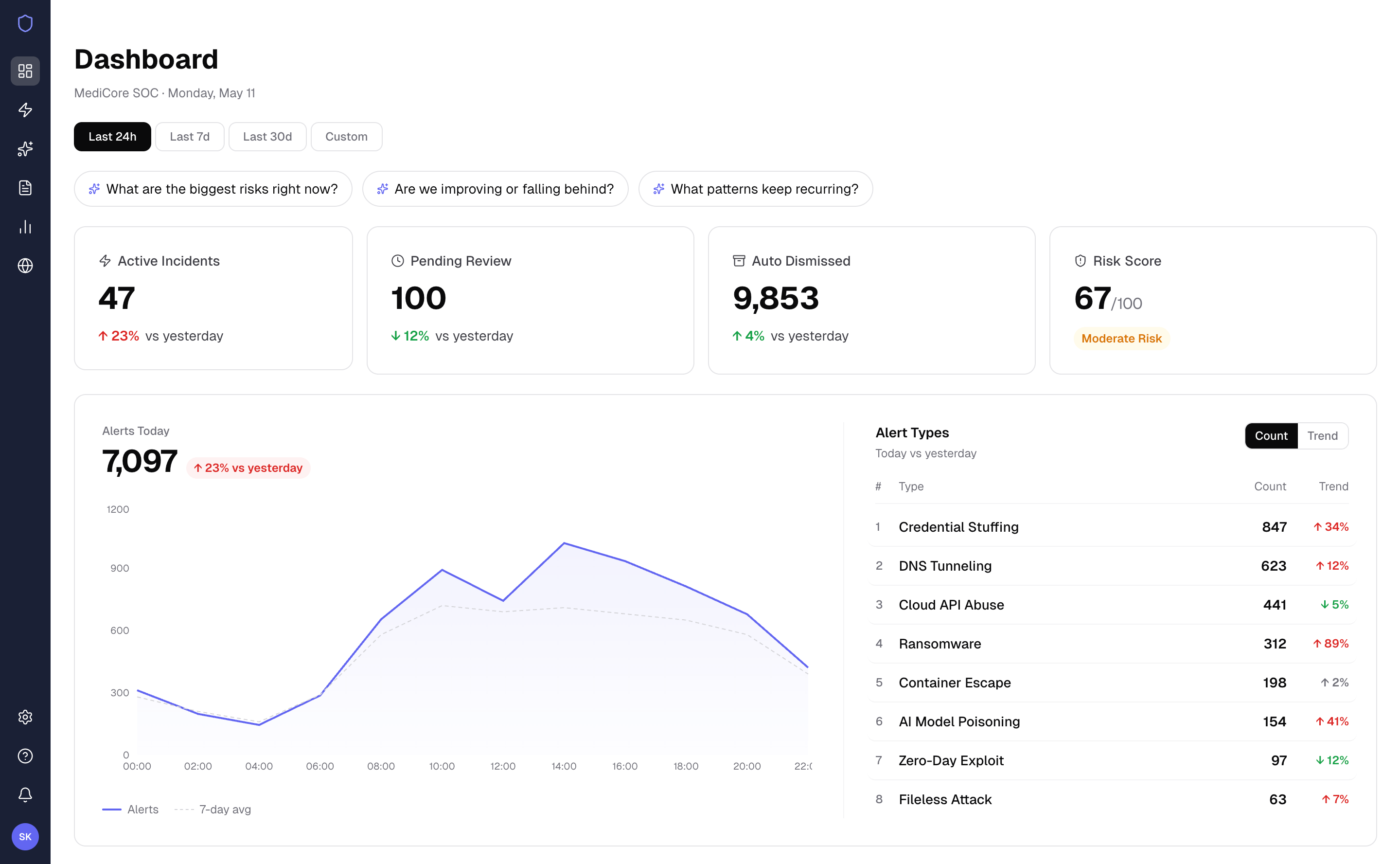
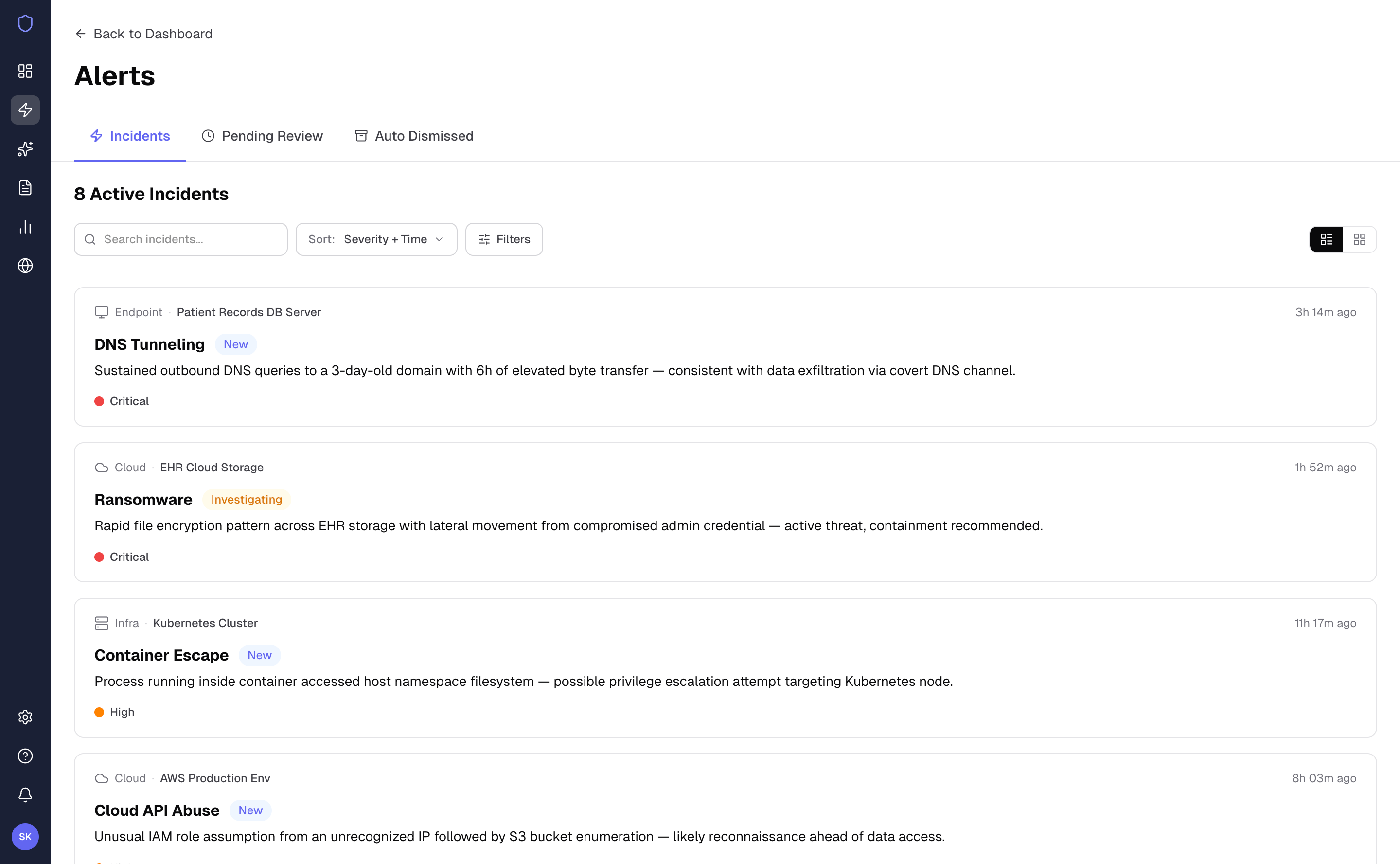
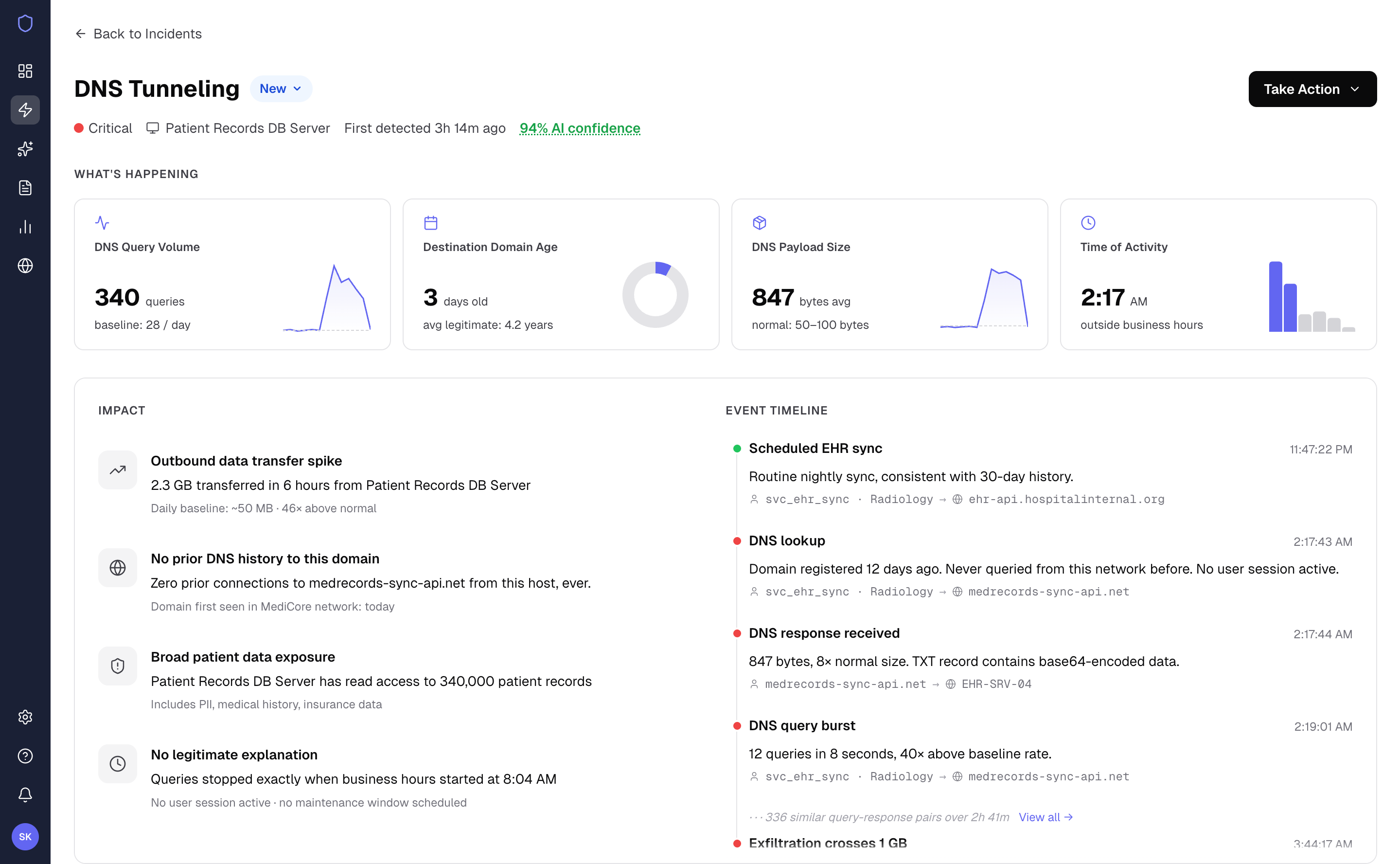
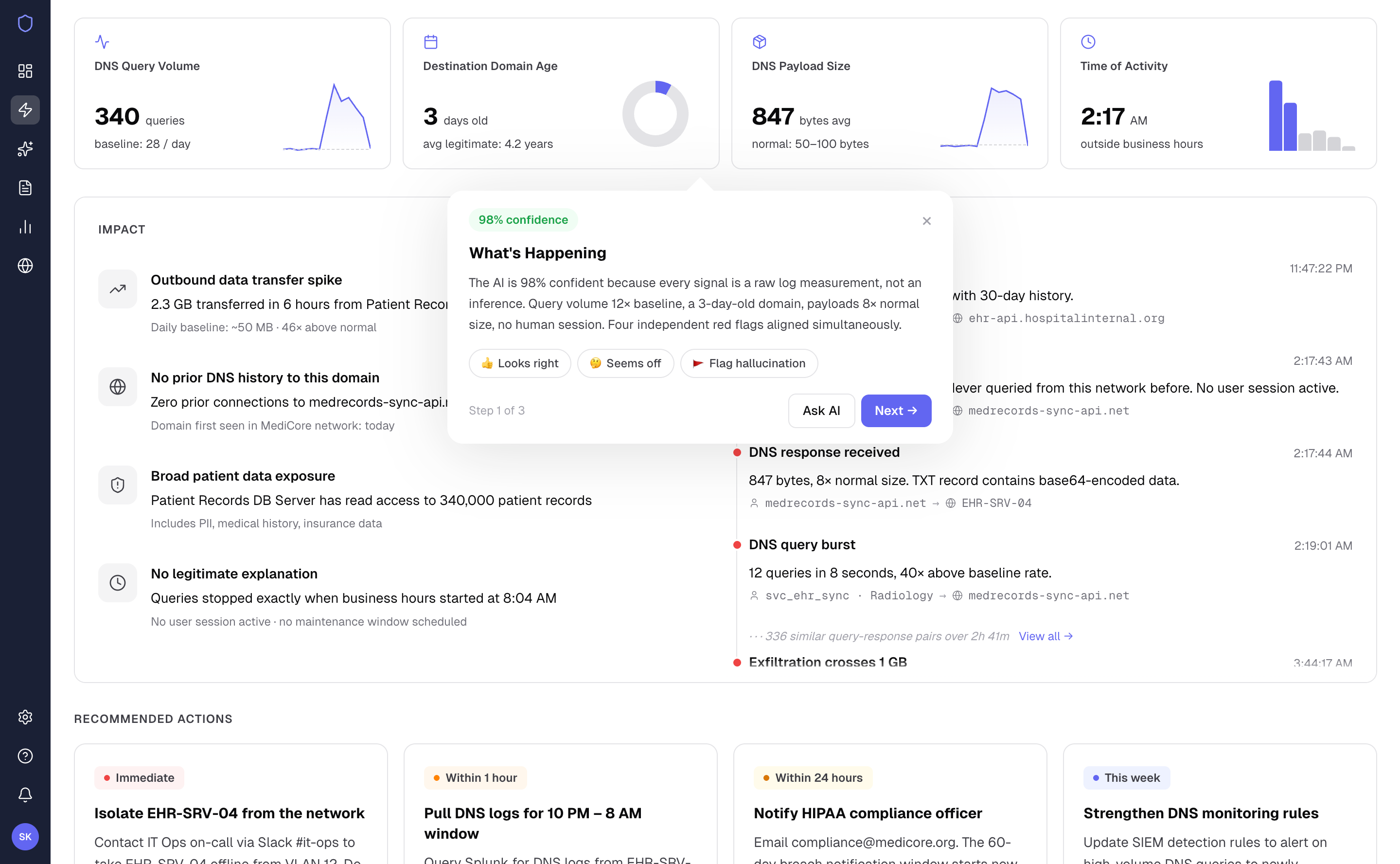
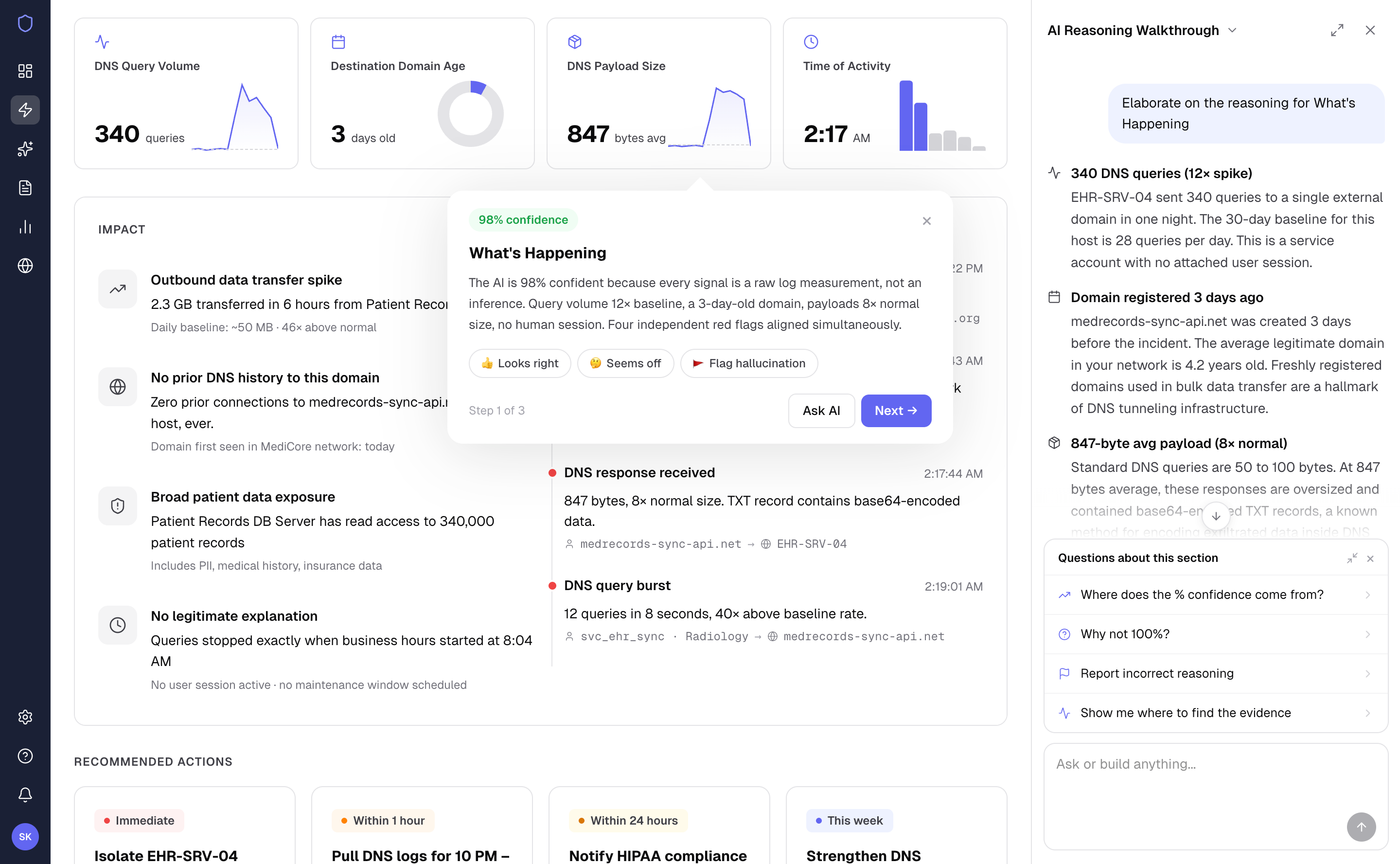
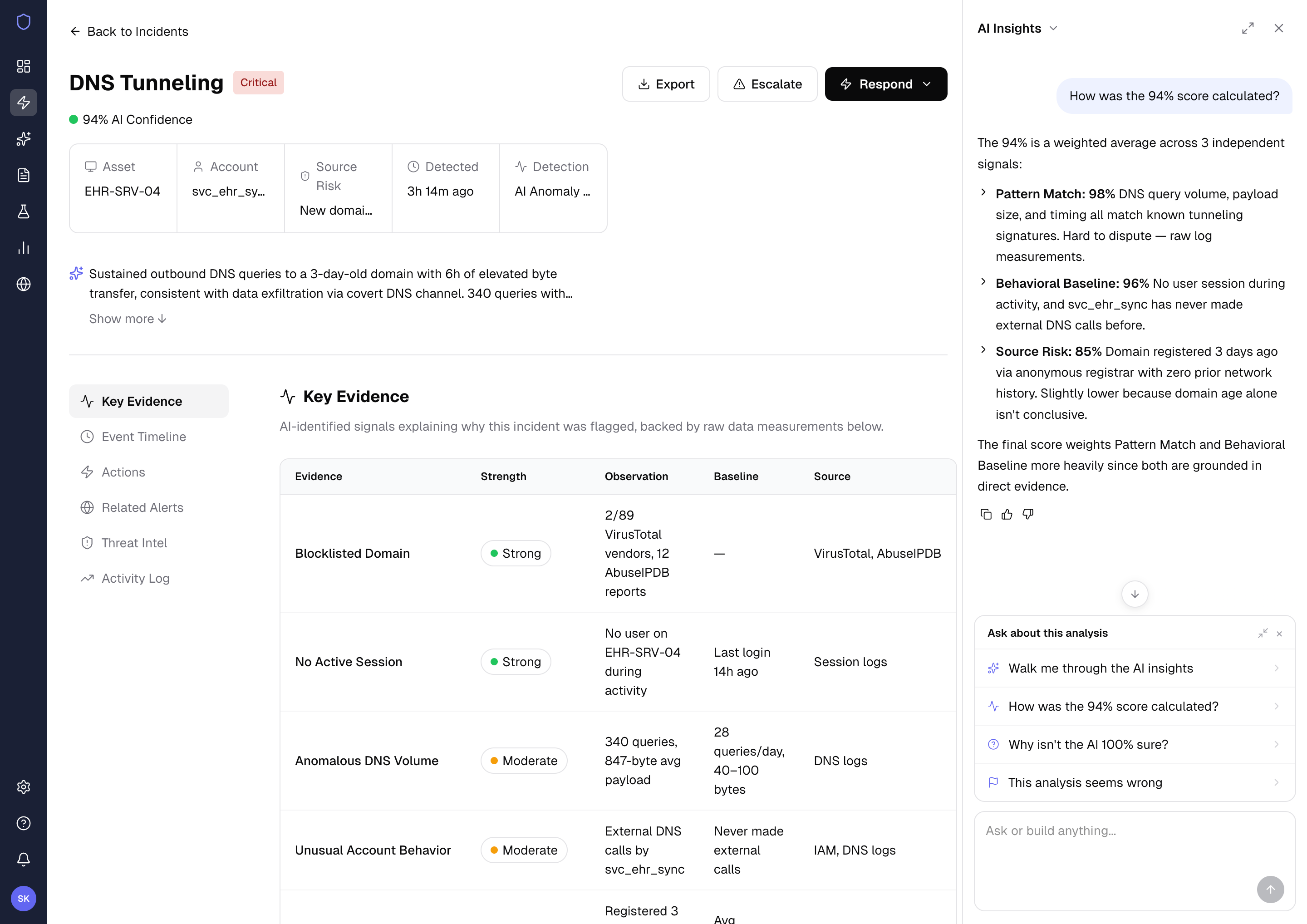
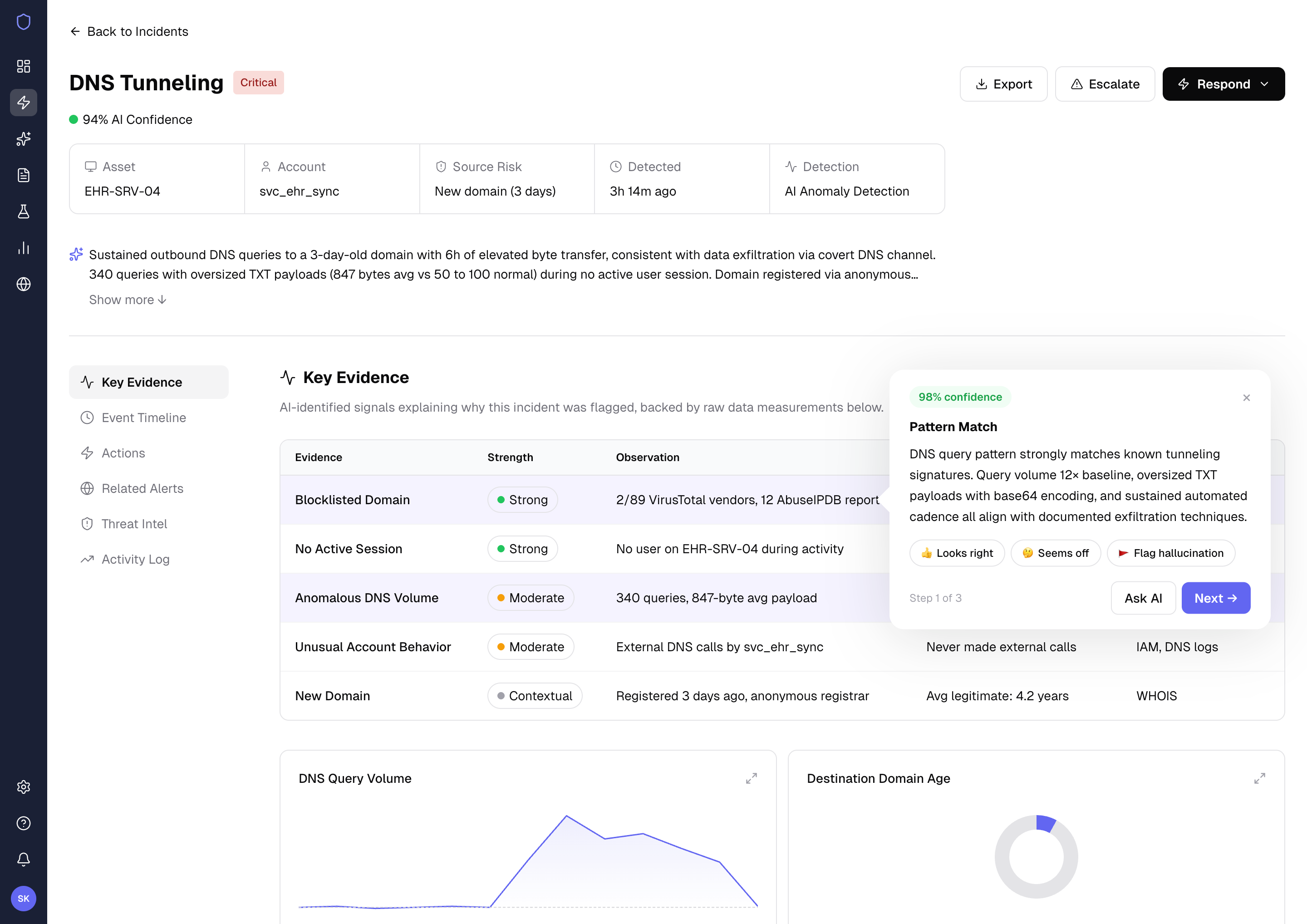
SOC risk dashboard
Active incidents list
AI confidence breakdown
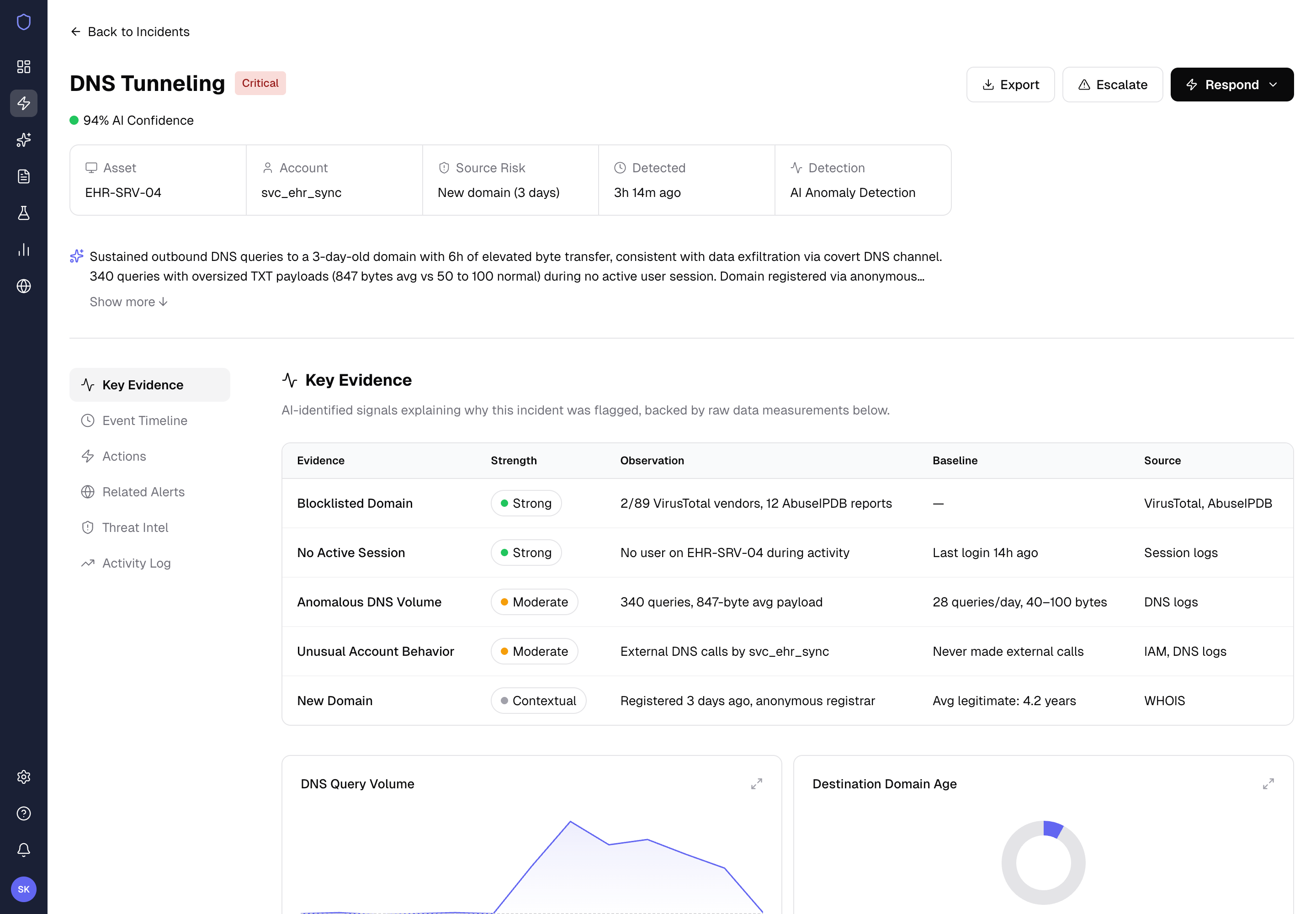
Incident detail
Key evidence
AI Insights panel
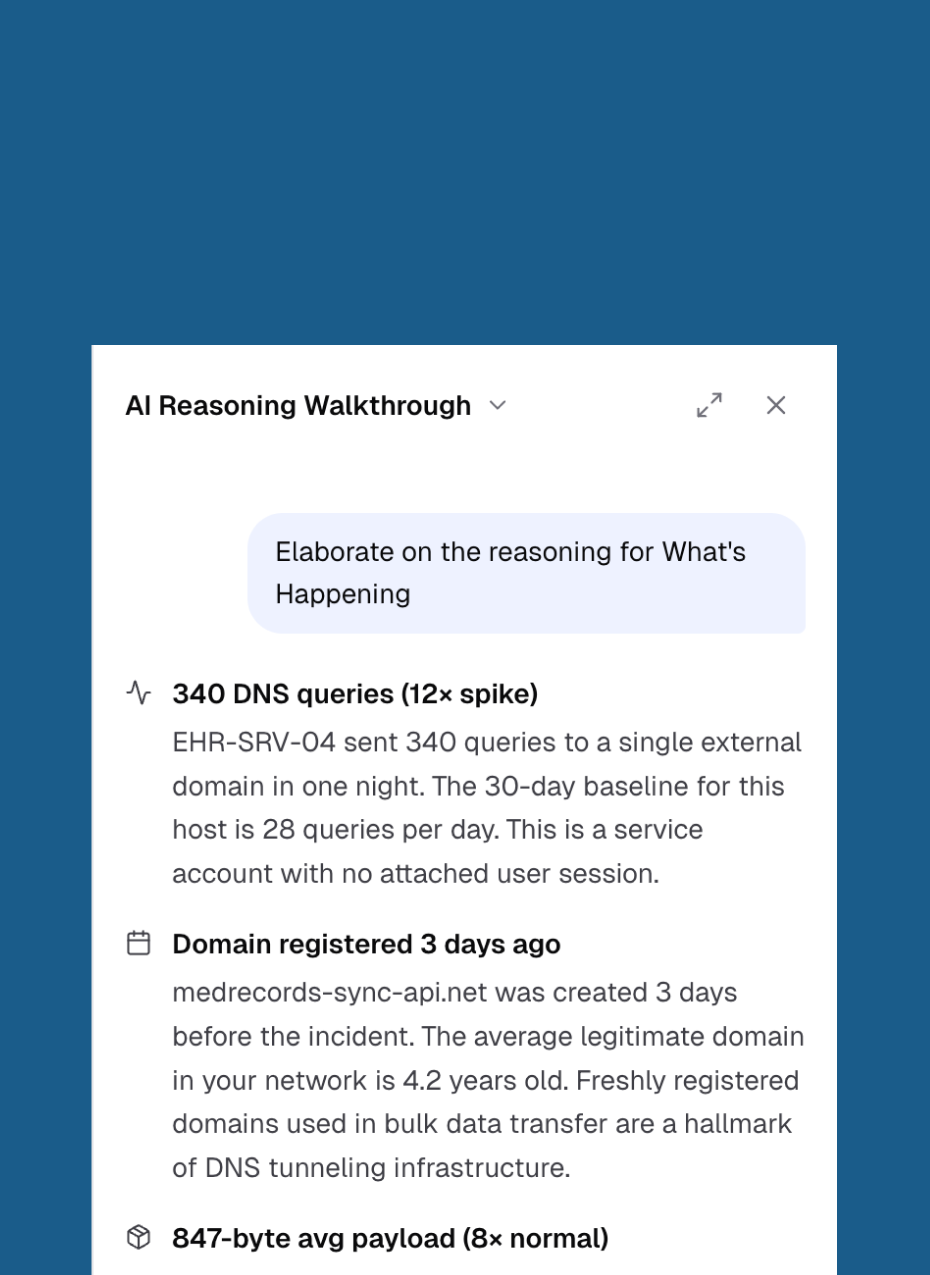
AI confidence walkthrough
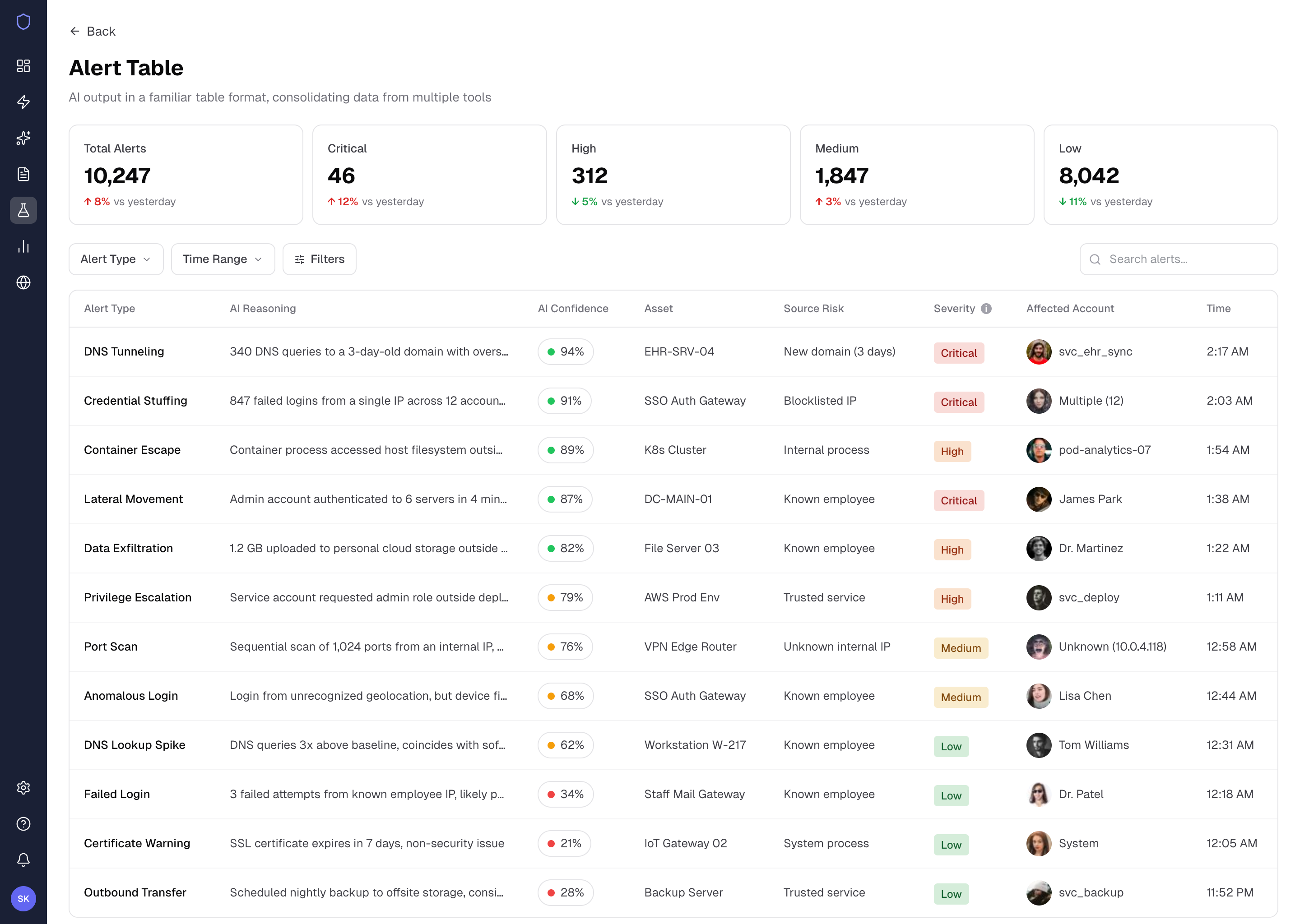
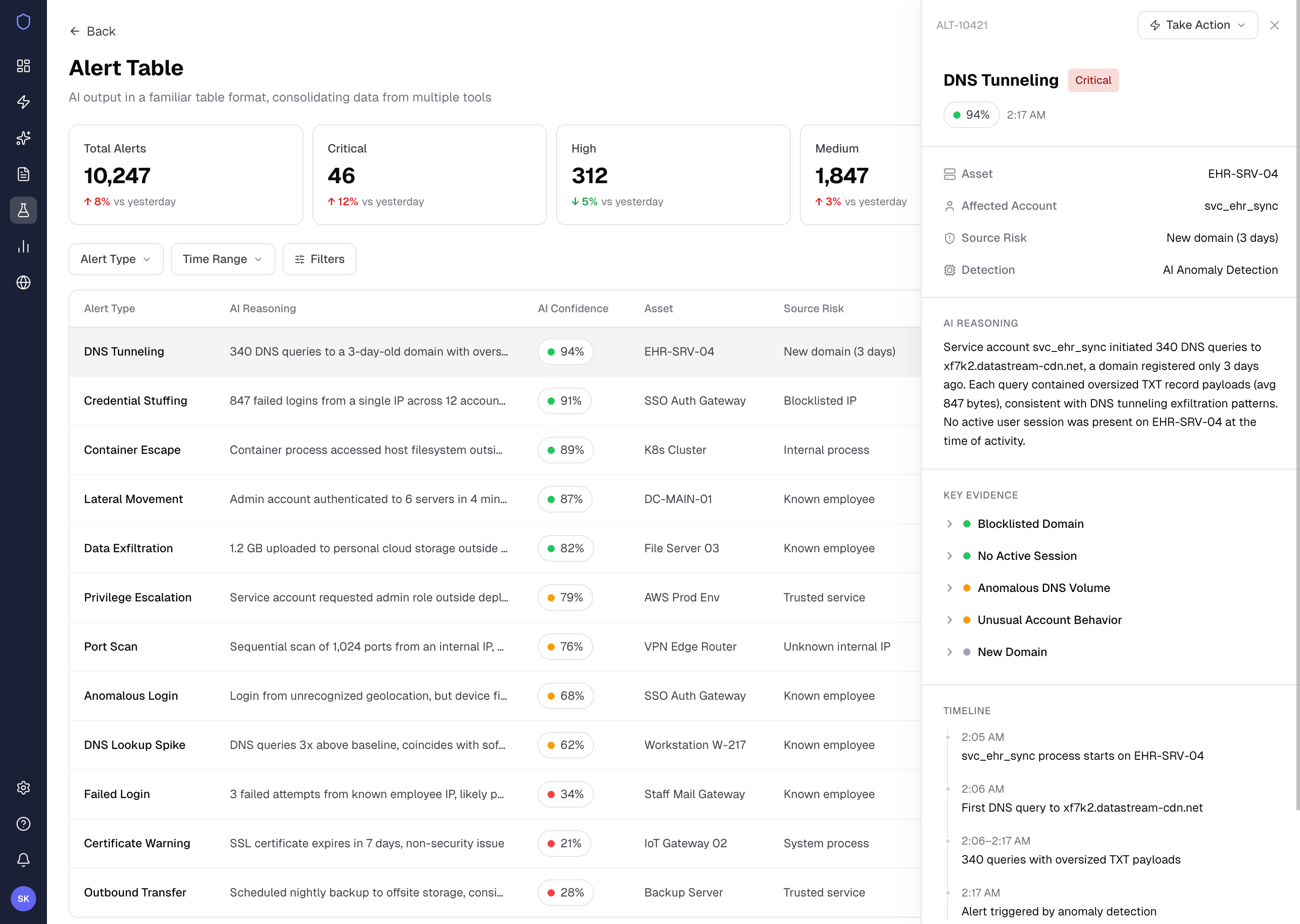
First Iteration
An alert table with AI reasoning, confidence scores, and supporting context.
We were a small startup with no user pool to interview, so I needed to prototype quickly. After speaking to the internal team to understand users' workflow, my first assumption was to surface alerts in a familiar format: a table showing severity, AI confidence score, AI reasoning, and the data users previously gathered manually across multiple tools.
Second Iteration
A funnel surfaces the AI's conclusions and supporting evidence.
The feedback: the reasoning and evidence helped, and that part landed. But users still needed to review, correlate, and decide. The table showed what AI detected, not what AI decided.
The feedback led me to a different direction. What if I show everything around what the AI had already concluded? The second iteration functions as a funnel that surfaces the AI's conclusions and supporting evidence.
Third Iteration
An AI confidence walkthrough and a chat panel that allows users to dig in.
The team loved how I surfaced the AI's insights in a funnel format, and for the first time, people could actually follow the AI's logic. But users wanted to be able to question it and dig deeper.
So this round of iteration will let users know how AI confidence was calculated, trace the reasoning alongside the evidence that supports it, and use the chat panel to dig deeper.
Results
All users loved that they didn't have to open multiple tools to figure out what was happening.
70% of users resolved incidents without cross-checking raw logs.
Among users who acted, decision time reduced by 30%.
Learnings
Confidence doesn't build trust. Honesty does.
Transparency is about showing information at the right moment.